Within the UK healthcare landscape, the formal classification of gambling disorder as a distinct mental health condition represents a pivotal shift. This recognition, enshrined in global diagnostic manuals, fundamentally alters how clinicians approach diagnosis, how the NHS structures treatment pathways, and how medical professionals pursue continuing professional development (CPD). For doctors, nurses, and allied health professionals in the UK, understanding the frameworks of the ICD-11 and DSM-5 is not merely academic; it is essential for delivering evidence-based, compassionate care and meeting the stringent CPD requirements set by bodies like the General Medical Council (GMC). This article explores the clinical definitions, their implications for the NHS’s network of problem gambling clinics, and the vital CPD opportunities available for UK healthcare practitioners.
What is Gambling Disorder? A Clinical Definition
Gambling disorder, often colloquially referred to as problem or pathological gambling, is defined clinically as a persistent and recurrent pattern of gambling behaviour that leads to significant impairment or distress. Its classification as a behavioural addiction—placing it in a similar category to substance-related disorders—is a critical development. This framing acknowledges that the compulsive behaviour activates the brain’s reward systems similarly to drugs of abuse, leading to a loss of control, craving, and continued engagement despite severe personal, financial, and social consequences.
DSM-5 Diagnostic Criteria
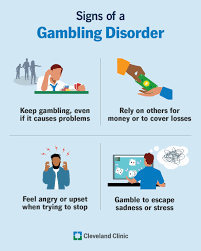
The Diagnostic and Statistical Manual of Mental Disorders, Fifth Edition (DSM-5), published by the American Psychiatric Association, moved gambling disorder from the ‘Impulse-Control Disorders’ category into a new chapter titled ‘Substance-Related and Addictive Disorders’. This was a landmark change. Diagnosis requires an individual to meet at least four of the following nine criteria within a 12-month period:
- Needs to gamble with increasing amounts of money to achieve the desired excitement.
- Is restless or irritable when attempting to cut down or stop gambling.
- Has made repeated unsuccessful efforts to control, cut back, or stop gambling.
- Is often preoccupied with gambling (e.g., reliving past experiences, planning the next venture).
- Often gambles when feeling distressed (e.g., helpless, guilty, anxious).
- After losing money gambling, often returns another day to get even (“chasing” losses).
- Lies to conceal the extent of involvement with gambling.
- Has jeopardised or lost a significant relationship, job, or educational opportunity because of gambling.
- Relies on others to provide money to relieve desperate financial situations caused by gambling.
ICD-11 Classification and Codes
The International Classification of Diseases, 11th Revision (ICD-11), used by the NHS and health services worldwide, formally recognised gambling disorder as a diagnosable condition under ‘Disorders due to addictive behaviours’. The specific code is 6C50. The ICD-11 description emphasises a pattern of persistent or recurrent gambling behaviour, manifested by impaired control over gambling, increasing priority given to gambling over other life interests, and continuation or escalation of gambling despite negative consequences. The severity is specified as mild, moderate, or severe based on the number of manifestation symptoms present. This standardised coding is crucial for NHS clinical record-keeping, treatment planning, and service commissioning.
ICD-11 vs. DSM-5: Comparing Diagnostic Frameworks
For UK practitioners, navigating both the ICD-11 (the NHS standard) and the DSM-5 (influential in clinical research) is a practical necessity. While aligned in core principles, understanding their nuances ensures accurate diagnosis and communication.
Key Similarities in Criteria
Both systems converge on the fundamental concept of gambling disorder as an addiction. They emphasise core features such as:
- Loss of Control: Difficulty limiting time and money spent on gambling.
- Salience: Gambling becoming a central preoccupation in life.
- Continuation Despite Harm: Persisting with behaviour despite clear negative consequences to relationships, finances, and mental health.
- Withdrawal-like States: Restlessness and irritability when attempting to stop.
This consensus has been instrumental in shaping consistent treatment philosophies across the NHS’s specialist services.
Notable Differences and Their Impact
The primary difference lies in their structure and context. The DSM-5 uses a specific threshold (4 out of 9 criteria) for diagnosis, which can be useful for standardised assessment tools. The ICD-11 employs a more descriptive approach with a severity specifier, which some clinicians find more flexible for capturing the individual’s clinical presentation. Importantly, the ICD-11 is integrated into the UK’s healthcare infrastructure—it is used for NHS statistics, funding models, and clinical guidelines. Therefore, while a clinician may use DSM-5 criteria for assessment, the formal diagnosis and coding for an NHS patient’s record will adhere to ICD-11.
NHS Problem Gambling Clinics: Treatment in the UK
The formal recognition of gambling disorder has directly enabled the development of dedicated NHS services. Moving away from a reliance on third-sector organisations, the NHS in England has established a national network of specialist clinics to provide free, evidence-based treatment.
Overview of NHS Gambling Services
The cornerstone of this network is the National Problem Gambling Clinic in London, the first of its kind in the UK. It serves as a centre of excellence for complex cases and a hub for research and training. Building on this model, NHS England is rolling out a broader network of seven specialist problem gambling clinics across the country, located in areas including Leeds, Manchester, Southampton, and Stoke-on-Trent. These clinics offer multidisciplinary support, bringing together psychiatrists, psychologists, mental health nurses, and financial advisors to address the multifaceted nature of the disorder.
Evidence-Based Treatment Approaches
Treatment within the NHS clinics is grounded in National Institute for Health and Care Excellence (NICE)-informed practices. The core therapeutic modality is often Cognitive Behavioural Therapy (CBT), specifically tailored to address gambling-related thoughts, urges, and behaviours. Other evidence-based approaches include:
- Motivational Interviewing (MI): To enhance readiness for change and resolve ambivalence.
- Family Therapy: To repair relationships and involve support networks in recovery.
- Pharmacological Interventions: In some cases, medications such as selective serotonin reuptake inhibitors (SSRIs) or naltrexone may be considered for co-occurring conditions or to reduce cravings.
- Financial Harm Mitigation: Practical support with debt management and financial counselling is a critical, non-clinical component of care.
CPD for Gambling Disorder: GMC Guidelines and UK Training
For medical professionals, maintaining competence in treating behavioural addictions like gambling disorder is a core professional duty. The General Medical Council (GMC) CPD guidelines mandate that doctors must keep their knowledge and skills up to date across all areas of their practice, including addiction medicine.
GMC Standards for CPD in Addiction
The GMC does not prescribe specific topics but requires that CPD activities are relevant to a doctor’s scope of work, address any gaps in knowledge, and contribute to improving patient care. For GPs, psychiatrists, and even doctors in acute settings who may encounter patients with gambling-related harm, CPD on behavioural addictions is directly relevant. Activities should be recorded in a reflective portfolio, demonstrating how the learning has been applied to practice—for example, improving screening questions or understanding local referral pathways to an NHS gambling clinic.
Recommended CPD Courses and Providers
Thankfully, high-quality UK-specific CPD on this topic is increasingly accessible. Reputable providers offer courses that satisfy GMC requirements. Key recommendations include:
- BMJ Learning CPD modules on addiction: These online, on-demand modules are a convenient and authoritative source, often covering topics like brief interventions and co-morbidity management.
- Royal College of Psychiatrists (RC Psych) Certificates and Resources: The RC Psych offers dedicated training and materials in addiction psychiatry, highly relevant for specialists.
- CPD Certified Workshops from Charities: Organisations like GamCare and Gordon Moody often provide practitioner training workshops accredited for CPD hours.
- University-Led Programmes: Several UK universities offer postgraduate modules or short courses in addiction studies, which provide in-depth, academic CPD.
The Future of Gambling Disorder Care in the UK
The landscape of gambling disorder treatment in the UK is evolving rapidly. Key trends shaping its future include the expansion of the NHS clinic network, aiming to reduce geographic inequalities in access. There is a growing push for integrated care pathways, where screening for gambling harm becomes routine in primary care, mental health services, and debt advice settings. Policy developments, such as potential reforms to gambling legislation and the integration of gambling treatment into the NHS Long Term Plan, will further influence service provision. Additionally, increased research into digital therapeutics and the neurobiology of behavioural addictions promises to refine treatment efficacy in the years to come.
In conclusion, the formal diagnostic recognition of gambling disorder has catalysed significant progress in UK healthcare, from the establishment of dedicated NHS problem gambling clinics to the development of targeted UK CPD healthcare training. For medical professionals, engaging with this evolving field through continuous learning is not just a regulatory obligation but a critical step towards addressing a profound and often hidden public health challenge. Effective management of gambling disorder in the UK hinges on this dual foundation: accessible, specialist NHS services and a workforce committed to evidence-based, compassionate care through ongoing professional development.